Adjustable Bed Cost: Bases vs Full Beds, Split-King, and the Mattress Sold Separately
Adjustable bases vs full beds, split-king setups, the features that matter for getting in and out of bed, and why the mattress costs extra.
Read the guide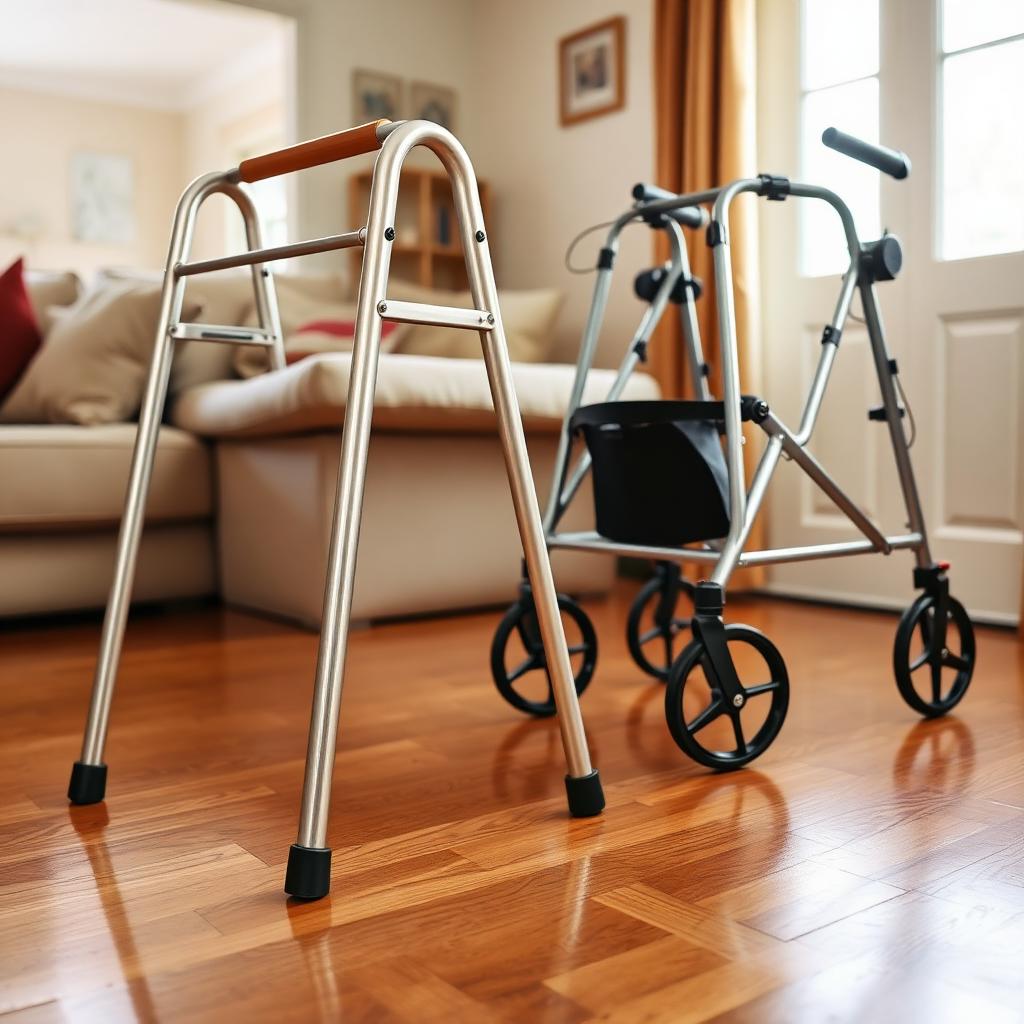
This guide contains paid links. As an Amazon Associate I earn from qualifying purchases.
“The doctor said Mom should use a walker, but she wants a walker with a seat. What’s the difference, and what do they cost?”
Quick answer: A standard walker (no wheels, or two front wheels) is the simplest and usually the least expensive option. A rollator (three or four wheels, hand brakes, usually a seat and a basket) costs more, because it has wheels, brakes, and a seat. Fit matters more than price: handle height should line up with the wrist crease when the person stands upright with arms relaxed at their sides.
| Type | How it works | Price position |
|---|---|---|
| Standard walker | Four legs, no wheels; lifted and set down with each step | Simplest and usually the lowest-cost |
| Two-wheel (front-wheeled) walker | Wheels on the front legs, glides or tips on the back; pushed instead of lifted | A small step up from a standard walker |
| Rollator | Three or four wheels, hand brakes, usually a seat and basket | Higher, because of wheels, brakes, and seat |
Prices vary widely by brand, weight capacity, and features. Compare models of the same type, weight rating, and wheel size.
Drive Medical Aluminum Rollator Fold Up and Removable Back Support, Padded Seat with 7.5-Inch Casters, Red
The Drive Medical rollator has a padded seat, back support, and casters, matching the guide's advice to compare wheel size, seat height, and weight capacity.
Check price on AmazonPaid link. As an Amazon Associate I earn from qualifying purchases.
Original Medicare Part B generally covers walkers, including rollators, as durable medical equipment. That applies when a doctor or other treating practitioner orders one for use in the home and it’s supplied by a Medicare-enrolled supplier. The usual Part B deductible and coinsurance apply. Ask the supplier whether they accept Medicare assignment before ordering. This site is not affiliated with Medicare, CMS, or any government agency.
Have it fitted: which type suits a person, and the right handle height, are best checked by a physical or occupational therapist or the clinician who ordered it. Red flags worth raising with a clinician include new unsteadiness, a recent fall, or a walker that suddenly feels harder to use. This is general information, not personal medical advice.
Rule of thumb: match the type to the surface and the person’s need. A walker suits steadiness indoors; a rollator suits distance and outings. Then set the handles at the wrist crease and lock the brakes every time someone sits.
Adjustable bases vs full beds, split-king setups, the features that matter for getting in and out of bed, and why the mattress costs extra.
Read the guideEvery mobility and home-safety price range on one page: tubs, showers, stair lifts, lift chairs, ramps, grab bars, toilets, alerts, beds, and walkers.
Read the guideShower seats generally cost $15\u2013$150. Chairs vs stools vs transfer benches, weight ratings, and why most need no installation.
Read the guide