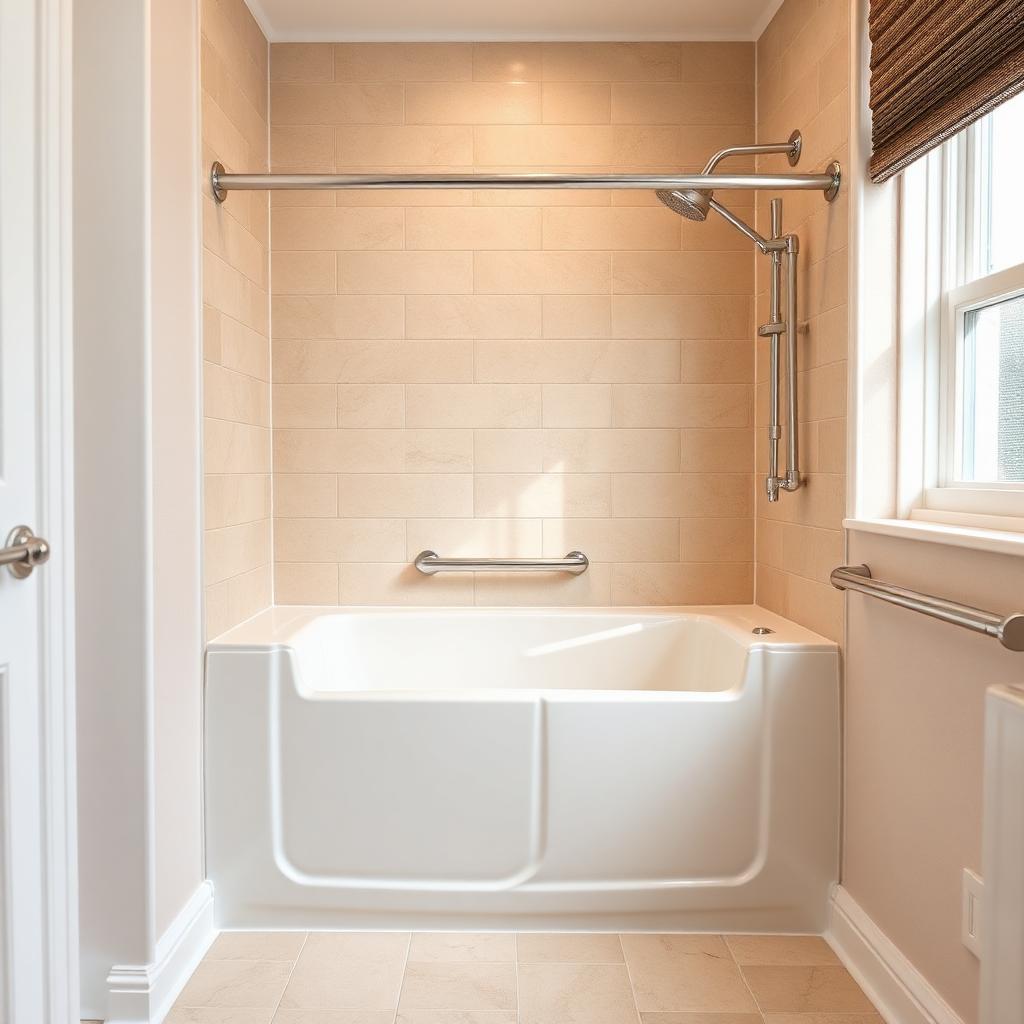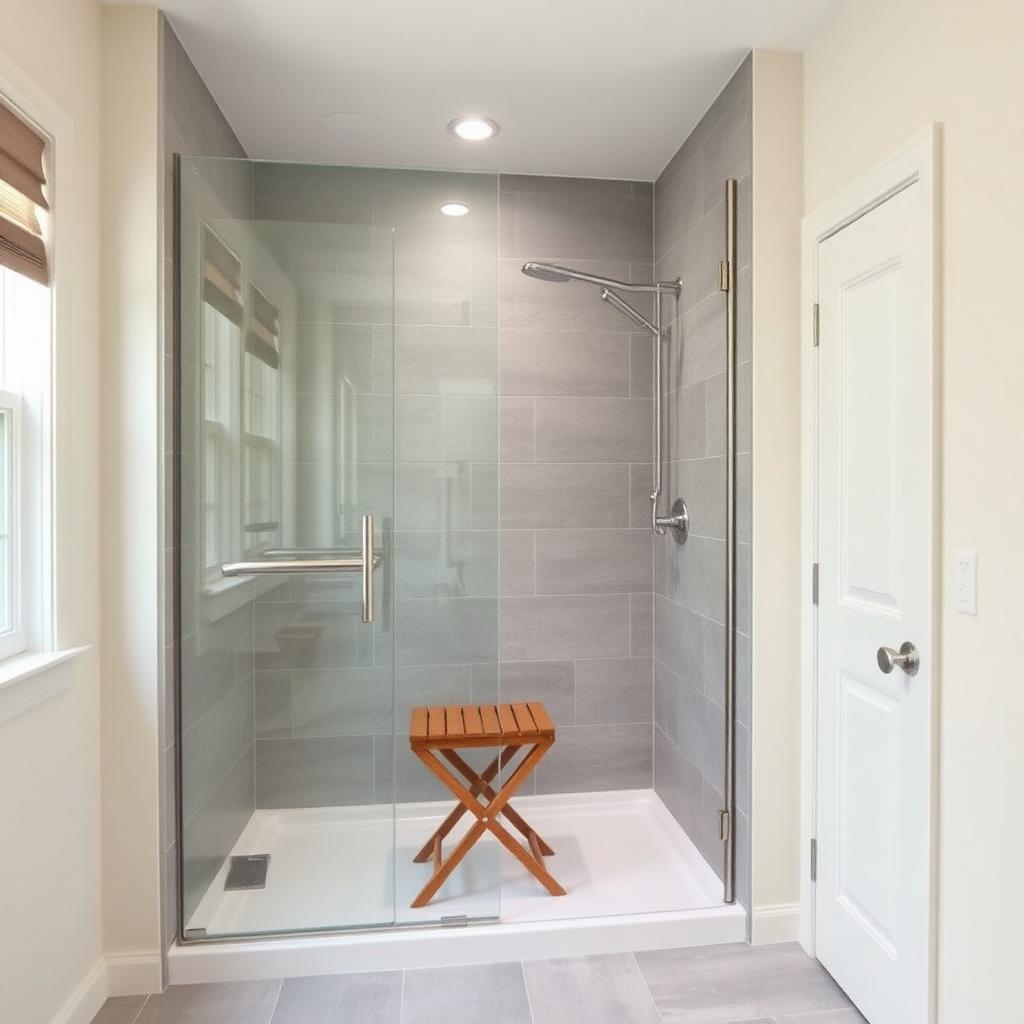
Walk-in Shower Cost: Tub-to-Shower Kits vs a Full Remodel, Curbs, and Doors
Tub-to-shower conversion kit vs a full remodel, curb and door options, and the resale catch of removing the house\x27s only tub.
Read the guide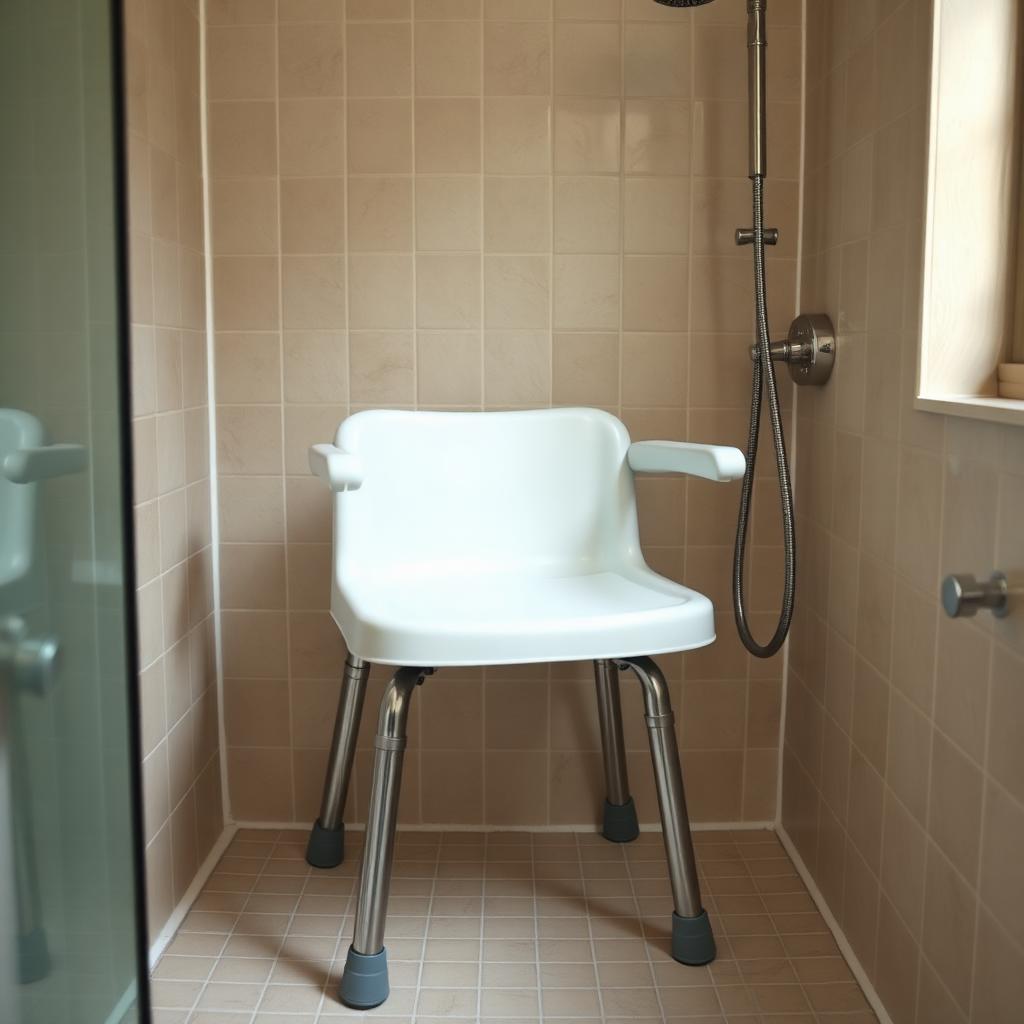
This guide contains paid links. As an Amazon Associate I earn from qualifying purchases.
“Dad gets tired standing in the shower, and climbing over the tub is getting risky. Do we need a shower seat or one of those benches that goes over the side, and what do they cost?”
Quick answer: Shower seats are small-ticket items. Shower seats, grab bars, and similar bathroom aids generally sell for $15–$150. Tub transfer benches are priced separately; compare listings with the same weight rating. Most of these need no installation. You assemble the legs, set the height, and put the seat in the tub or shower. The exception is a wall-mounted fold-down seat, which has to be anchored into the wall like a grab bar.
| Type | What it is | Price basis |
|---|---|---|
| Shower stool | A seat with legs and no back. It’s small enough for a stall shower. | Small-aid band, generally $15–$150 |
| Shower chair | A seat with a backrest, sometimes with arms. It stands inside the tub or shower. | Small-aid band, generally $15–$150 |
| Tub transfer bench | A long bench that straddles the tub wall. Two legs stand inside the tub and two on the bathroom floor. | Compare listings by weight rating |
| Wall-mounted fold-down seat | A seat fixed to the shower wall that folds up when it’s not in use | The seat plus installation labor; get the labor quoted in writing |
A shower chair helps once the person is in the tub. It does nothing for the hardest part, which is stepping over the tub wall. A transfer bench handles that step:
Choose a transfer bench when getting over the tub wall is the problem. Choose a chair or stool when the person can get into the tub or a stall shower safely but can’t stand for the whole shower. In a walk-in or curbless shower, a chair or stool is usually enough.
Drive Medical Premium Shower Chair with Back and Padded Arms, White
The Drive Medical shower chair includes a back and padded arms, matching the guide's advice that a backrest and arms add support when sitting and standing.
Check price on AmazonPaid link. As an Amazon Associate I earn from qualifying purchases.
Freestanding stools, chairs, and transfer benches need no tools beyond what’s in the box, or none at all. The legs click or screw in, and the height is set with push-pins. Once you’ve set it up, check that every pin has clicked fully into place.
A fold-down seat is different. It’s mounted to the wall and takes a person’s full weight, so it has to go into studs, solid blocking, or anchors rated for that load. That’s the same job as a grab bar, with the same questions about tile and fiberglass surrounds. See the grab bar installation guide, and have a seat and grab bars installed in the same visit to save on labor.
Compare the same type and weight rating across at least two sellers, and for a fold-down seat, get the installation priced in writing.
Fit matters: which seat suits a person depends on how they get in and out of the tub, their balance, and the bathroom layout. Having an occupational therapist suggest the type and check the setup is a common and worthwhile step. Red flags worth raising with a clinician include a recent fall in the bathroom, dizziness in the shower, or new trouble standing up. This is general information, not personal medical advice.
Rule of thumb: if the tub wall is the problem, buy a transfer bench. If standing is the problem, buy a chair or stool. Check the weight rating and the measurements before you order. Only a fold-down wall seat needs an installer.
Tub-to-shower conversion kit vs a full remodel, curb and door options, and the resale catch of removing the house\x27s only tub.
Read the guideWalk-in tubs cost $4,000–$15,000 installed. What drives the price, soaker vs jetted, and the fill-and-drain wait.
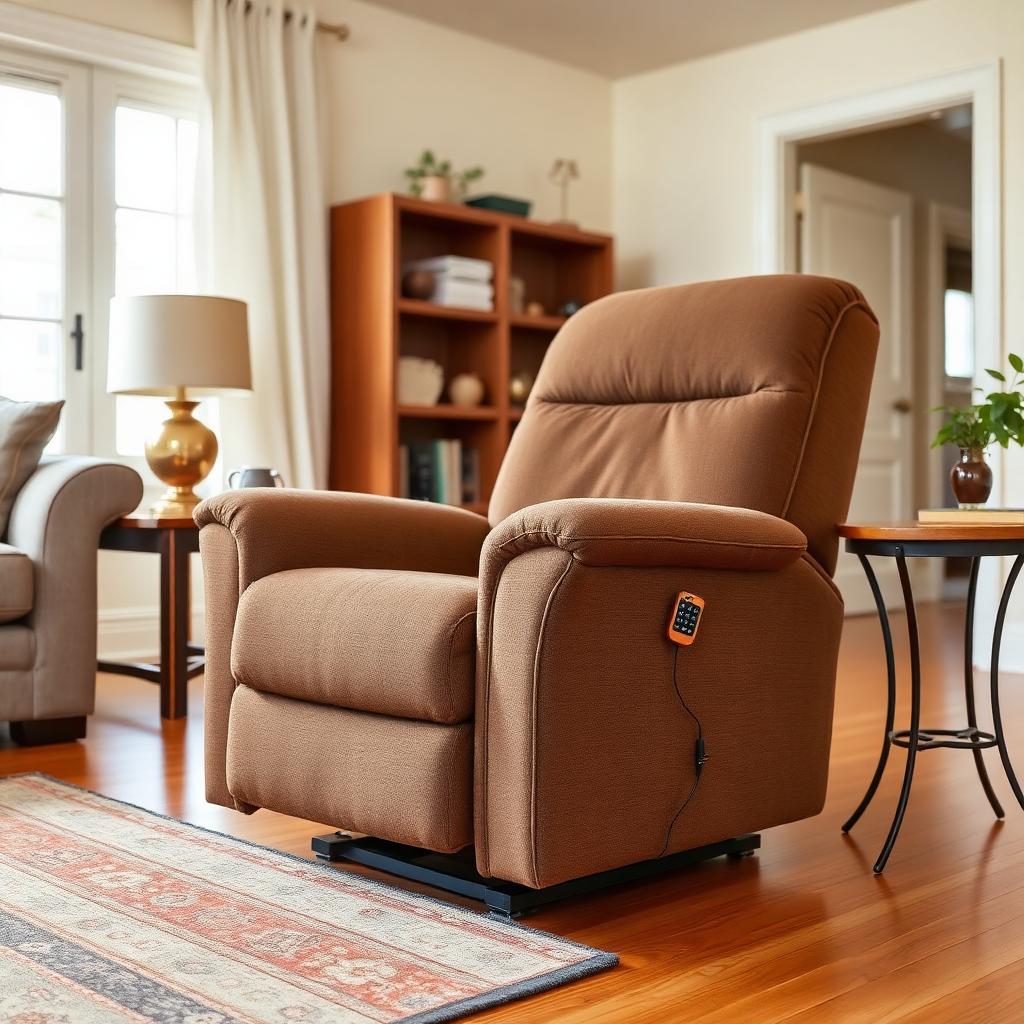
Read the guideLift chairs priced by type: 2-position, 3-position, and infinite-position. Fit facts, the Medicare lift-mechanism question, and the cheaper lift-cushion option.
Read the guide